 clcgh.org Building The Capacity Of Christian Leaders, Equipping The Saints For The Work Of Ministry, Redirecting Straying Christians To The Sound Knowledge Of Christ
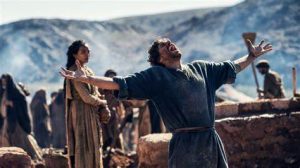
“So from that day on they made plans to put him to death. Jesus therefore no longer walked openly among the Jews, but went from there to the region near the wilderness to a town called Ephraim, and there he stayed with the disciples.(John 11:53-54).
Born again Christians have the Spirit of God in them. We also have faith by which we please God (Hebrews11:6). Besides, God has not given us the spirit of fear but of power (2 Timothy 1:7). Above all, we have God as our rock, protector, deliverer, defender, buckler and ultimately saviour.
Thus, most Christians boldly confess “if God is for me who can be against me” (Romans 8:31), no weapon formed against me shall prosper (Isaiah 54:17), I shall not die, but live, and declare the works of the Lord” (Psalm 118:17).
Moreover, we declare “A thousand may fall at your side, ten thousand at your right hand, but it will not come near you. You will only look with your eyes and see the recompense of the wicked” (Psalm 91:7).
Now, do all of these mean that we can always act carelessly, make senseless decisions or disregard precautionary measures in the face of threats or insecurities, thinking that we will be divinely protected? Does faith in God impairs people’s right sense of judgment, reasoning or critical thinking in the face of hostility?
Certainly not, because Christians are exhorted to show maturity in thinking (1 Corinthians 14:20). Importantly, we are called to learn from Jesus Christ who is the best guide and role model for humanity. We must learn from His teachings, decisions, conducts, actions, and behaviours because they are our standard.
Jesus was not only a man who lived a life of faith when He walked the earth, He was also God. In this short article, we want to learn from our Lord how He acted when He realized that His life was threatened as a man.
We want to know whether or not His faith influenced Him to make foolish or wise decisions when His life was at risk. It is appointed onto every human being to die, but everyone has the right to live until they accomplish their divine assignments on earth.
As a man, anytime Jesus realized that His security was threatened, He took wise decisions to protect His life, knowing that His time of departure had not yet come, and He had divine duties to perform. Jesus had enemies who wanted Him dead before His appointed time.
We have read earlier in John 11:53-54 that Jesus “no longer walked openly among the Jews, who plotted to kill Him. This is to teach us that faith does not make believers act foolishly and unwisely in the face of danger. It does not make Christians behave recklessly.
However, faith respects Scripture, honours Jesus’ example, and helps believers to avoid the sin of presumption. This sin is briefly explained in the last paragraph of the article. The fact that we have God on our side does not make us immortal.
During His temptation, the devil said to Jesus, “If you are the Son of God, throw yourself down, for it is written, ‘He will command his angels concerning you, ‘and ‘On their hands they will bear you up, lest you strike your foot against a stone” (Matthew 4:5-6).
Remember that Jesus did not fall for Satan’s trick. He applied wisdom to defeat him by quoting Scripture when the Lord said to him “Again it is written, ‘You shall not put the Lord your God to the test” (Matthew 4:7). If Jesus managed to flee deadly threats, we must learn to do same.
Moreover, Paul escaped through a basket (Acts 9:25). Joseph fled Herod with baby Jesus (Matthew 2:13–14). Nehemiah set guards during the rebuilding of the Wall (See Nehemiah Chapter 4). Elijah fled Jezebel (See 1 Kings 19).
Similarly, when Saul was seeking to kill David, Jesse’s son had to flee though God was with him (1 Samuel 21:10). He acted wisely, showing that his sense of judgment was working properly. He knew he had the opportunity to save his life by the wisdom of God.
All these teach us not to tolerate danger when wisdom warns us to flee. It does not mean we are fearful, but because we apply knowledge. God’s promise of seeing us through fire does not mean that we should deliberately walk into blazing fires or infernos. That will be a foolish action that can lead to suicide (self murder) which is a sin.
Though God protects His children, we must be careful about the sin of presumption, a great transgression. This is when we act without permission, thinking that God is somehow duty-bound to support us no matter what we do. That is an act of carelessness with God and His Word.
By James Quansah